
Practitioner’s Monograph
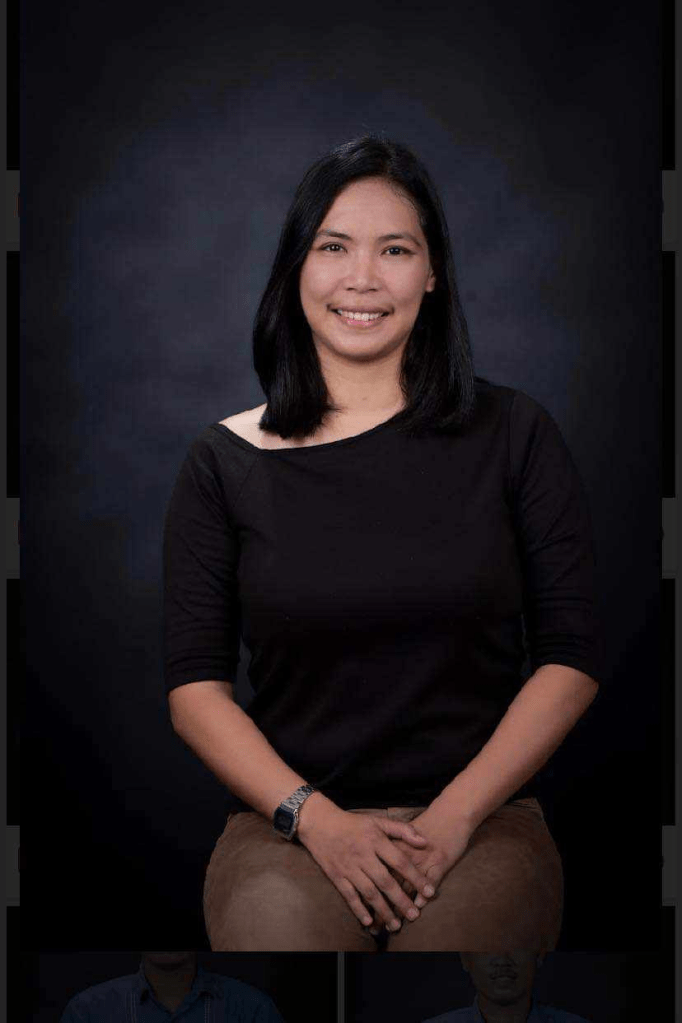
by Honey Cel T. Martinez, LPT, MAEd-SNED
AN EDUCATOR’S JOURNEY
By
HONEY CEL T. MARTINEZ, LPT,MAEd-SNED
Chapter I
The Inclusive Vision
In the heart of Balanga City, inside a typical public school classroom, sits a diverse group of learners—some with special needs formally diagnosed, many with undiagnosed learning difficulties, and all carrying stories that extend far beyond textbooks. As a public school teacher and a graduate of Special Needs Education (SNED), I have come to realize that inclusion is not merely a policy or philosophy. It is a daily commitment, one that requires courage, flexibility, and a deep belief that every child can learn, and every child deserves to belong.
Inclusive education in the Philippines has been shaped by Republic Act 10533 or the Enhanced Basic Education Act, and more specifically by DepEd Order No. 72, s. 2009, which calls for inclusive strategies within mainstream classrooms. Yet while policies may define our direction, it is the classroom—the chalk-dusted floors, overcrowded seating, and weather-worn bulletin boards—that defines our practice. Here, inclusion takes form not as a theory, but as a lived experience.
My journey into inclusive teaching did not begin with expertise—it began with struggle. In my early years of teaching, I encountered students who challenged conventional approaches. One child flapped his hands and could not maintain eye contact. Another repeatedly forgot instructions. A third would not speak unless asked in a whisper. These behaviors were not signs of disrespect or laziness—they were cries for understanding. It was only when I pursued further studies in SNED that I learned how to listen differently, plan differently, and teach differently.
Inclusion, I learned, is not about giving all students the same. It is about giving each what they need.
In a system that often measures success by standard scores and uniform outputs, inclusive education dares to ask: What does success look like for this child? This question has become my guide. For one learner, success may be expressing a complete sentence. For another, it may be reading a paragraph aloud, or staying seated for ten minutes. In an inclusive classroom, these are not small achievements. They are milestones.
The vision of inclusion requires more than just accommodating learners—it demands welcoming them. True inclusion affirms that students with disabilities are not outsiders to be adjusted for, but equal participants in the classroom community. This vision, however, is not easily realized within the constraints of public education. Large class sizes, limited resources, and a lack of individualized support can make inclusive teaching feel idealistic, even impossible.
But what sustains the vision is the child. The one who beams when finally understood. The one who finishes a worksheet they never thought they could. The one who, after months of silence, raises a hand. These moments, though quiet and often unseen by others, are the victories of inclusion.
As I begin this monograph, I invite the reader into a teaching practice shaped not by perfection, but by purpose. The chapters that follow will offer a transparent look into the challenges, strategies, and stories that define inclusive teaching in one public school in Balanga City. My hope is that these experiences resonate with fellow educators, spark ideas for change, and affirm that inclusive education is not a dream—it is a duty.
Let inclusion not remain in memos or mandates, but in the heartbeat of every classroom.
Chapter II
Challenges in the Public School Setting: The Daily Realities of Inclusion
The path to inclusive education in the public school setting is neither smooth nor straightforward. For every ideal embedded in policy, there are real-life barriers that teachers must navigate with persistence, creativity, and emotional endurance. Teaching in a public school in Balanga City has made these challenges all the more vivid—each one shaping my understanding of what it truly means to include.
The first and most constant obstacle is the large class size. It is not uncommon to have over forty students in a single section, each one carrying their own cognitive, behavioral, emotional, and social differences. Within this crowd may be learners with Attention Deficit Hyperactivity Disorder (ADHD), undiagnosed autism spectrum behaviors, visual or hearing difficulties, or emotional trauma. In a classroom with limited space and minimal support, attending to each individual need feels like a daily tightrope walk.
Another pressing challenge is the absence of Individualized Education Plans (IEPs). In many public schools, children with learning difficulties or developmental concerns are not formally assessed by professionals. Without proper diagnosis and documentation, the creation of IEPs—which are essential in monitoring goals, tracking progress, and assigning support—is nearly impossible. Teachers are left to rely on observation, intuition, and makeshift adjustments. While these efforts are done with care, they cannot substitute for professional intervention.
The lack of specialized training among general education teachers also limits the effectiveness of inclusive practices. While the Department of Education has initiated various capacity-building efforts, not all teachers have access to SPED seminars, workshops, or modules. Without foundational knowledge in classroom accommodations, behavior management, or differentiated instruction, some educators inadvertently reinforce exclusion—assigning lower tasks to struggling learners, isolating disruptive students, or neglecting learners who fall between the cracks.
Moreover, material and infrastructural limitations further complicate inclusion. Many classrooms are ill-equipped with basic tools such as visual aids, tactile materials, adaptive seating, or assistive devices. Technology, which could bridge learning gaps, is often unavailable or insufficient. Even the simplest of accommodations—like a quiet corner for overstimulated learners—may be difficult to establish in crowded, shared learning spaces.
Also evident is the lack of a fully functioning referral and support system. Ideally, teachers who observe learning or behavioral concerns should be able to refer students to specialists, counselors, or a school-based SPED team. But in many cases, such teams either do not exist or are severely understaffed. This results in long waiting periods, delayed interventions, or no support at all.
The emotional toll on teachers is another silent challenge. The burden of trying to meet all student needs, with little guidance or recognition, often leads to stress, burnout, and feelings of inadequacy. Teachers are expected to be educators, counselors, assessors, and even surrogate parents—all within a single class period. It becomes difficult to sustain the energy and optimism needed for inclusive practice.
Despite these daunting realities, teachers continue to show up, adapt, and try. The act of inclusion in a public school classroom is not one of ease, but of resilience. Every worksheet modified, every instruction rephrased, every child given a second (or tenth) chance is a small rebellion against a system that is not yet fully inclusive.
These challenges are not just statistics or policy gaps—they are lived daily by thousands of teachers across the country. Recognizing them does not mean surrendering to them. Rather, it means anchoring inclusive practice in the truth of what teachers face, so that the solutions we imagine are not idealistic, but possible.
In the chapters that follow, I will share how I responded to these challenges through tangible strategies—crafted not in theory, but in the lived, imperfect, hopeful reality of a public school classroom.
Chapter III
Practical Strategies in the Inclusive Classroom: Making Learning Accessible for All
Inclusion is not a one-time adjustment—it is a continuous, conscious effort. Every school year, every lesson, and every learner requires the teacher to revisit, rethink, and reshape instructional strategies. In the inclusive public school classroom, strategies are not just tools for teaching—they are bridges to understanding, confidence, and connection. This chapter outlines the practical approaches I have used in my classroom in Balanga City, all developed from necessity and guided by a deep belief in the capacity of every child.
Differentiated Instruction: Teaching with Flexibility
At the core of inclusive practice is differentiation, which is the art of modifying content, process, product, and environment based on learners’ needs. In my classroom, this began with simple but intentional changes. For instance, in a reading activity, I would prepare three levels of texts: one with large fonts and visuals for struggling readers, one with standard vocabulary for the average group, and another with critical thinking prompts for advanced learners.
Assessments, too, were diversified. Instead of relying solely on written quizzes, I provided options: a drawing, a group presentation, or an oral retelling. By offering varied ways to express understanding, I allowed students to demonstrate learning in a way that matched their strengths.
Peer Support and Cooperative Learning
One of the most effective yet underutilized strategies in inclusive classrooms is peer tutoring. I trained my students to be learning partners, emphasizing respect, patience, and encouragement. Peer pairing was done not based on who was the “best,” but who could explain concepts clearly and compassionately.
In group tasks, I assigned roles, leader, recorder, timekeeper, encourager—so that every learner had a purpose. Students with special needs were often placed in roles that highlighted their strengths, such as designing visuals or managing materials. These cooperative setups nurtured both social interaction and academic engagement.
Visual, Tactile, and Multisensory Tools
Inclusive teaching must go beyond verbal instruction. For students with learning difficulties or sensory sensitivities, visual aids and tactile materials can transform understanding. I created flashcards with real-life images, used printed step-by-step instructions, and allowed the use of colored overlays for students sensitive to black-and-white contrast.
When teaching math, I introduced manipulatives—counters, sticks, and measuring cups—so learners could see and touch the concepts. In language lessons, I used graphic organizers, storytelling boards, and picture dictionaries. These tools were not expensive or high-tech—they were often made from recycled materials, printed in the faculty room, or drawn by hand—but their impact was significant.
Creating Predictability and Positive Behavior Support
Many of my learners, especially those with attention or emotional regulation challenges, thrived in a structured environment. I established consistent classroom routines: greetings, task transitions, and even cleanup time followed predictable steps. A visual schedule posted on the board reminded students what to expect next.
For behavior management, I applied positive reinforcement rather than punishment. I set up a “Star System” where students earned stars for effort, helpfulness, or improvement—not just for high scores. At the end of each week, stars could be exchanged for simple rewards like stickers, storytime choices, or leading an activity.
Involving Families and Stakeholders
No inclusive strategy works in isolation. I maintained open communication with parents, especially those of learners who showed signs of needing additional support. Parent-teacher journals, short text messages, or regular verbal feedback during dismissal time helped build trust and encouraged home reinforcement.
When possible, I coordinated with the school’s SNED coordinator or guidance counselor. Even if formal referrals were not always successful due to system constraints, the collaboration led to shared insights and joint efforts to support the learner.
These strategies may not be revolutionary in theory, but in practice, they create small shifts that accumulate into larger transformations. They are acts of intentional design and quiet advocacy, built not only on pedagogy but on empathy.
In the next chapter, I will share real stories from the classroom, moments when these strategies made a difference, and how even the smallest progress reaffirmed my commitment to inclusive teaching.
Chapter IV
Stories of Change
Inclusion is often imagined as grand gestures or sweeping reforms. But in reality, it is lived through quiet victories, small shifts in behavior, a spark of confidence, a breakthrough in learning. These moments rarely make it to headlines or reports, yet for the learner and the teacher, they are everything. This chapter shares several stories from my own classroom in Balanga City—each one a reminder that inclusive education, even when imperfect, has the power to transform lives.
The Boy Who Found His Voice
Ryan, not his real name, was a quiet, observant boy in my Grade 7 class. He never spoke unless directly addressed, and even then, his responses were often no more than a nod or a whisper. Some of his classmates believed he simply didn’t want to participate. But I noticed his eyes always followed the lesson, and his notebook was neat, his answers written carefully, albeit sparsely.
I began giving him tasks that didn’t require speech: pointing to the correct answer, drawing diagrams, or holding up cards. One day, during a group activity, he was assigned as the “illustrator” for his team’s science concept map. Not only did he produce a vibrant visual summary, but when his group presented, he voluntarily stood up and whispered his part of the explanation—just one sentence, but clear and accurate.
The class clapped. Ryan looked surprised, then smiled. It was the first time I saw him show pride in class. From then on, he began volunteering small answers, and his self-confidence slowly blossomed. Inclusion had not forced him to speak; it had given him a safe space where his voice felt welcome.
The Hyperactive Helper
Marvin, also not his real name, a boy in my Grade 8 section, was often described as “restless.” He would walk around the room during lectures, tap on desks, and interrupt discussions with off-topic questions. Some teachers wrote him off as disruptive, but I sensed that he needed structure, not punishment, but purpose.
I assigned him the role of “materials manager” in class. He would be in charge of distributing papers, collecting group outputs, and tidying the board after activities. To my surprise, he took the role seriously. He arrived early, asked for instructions, and slowly began to take pride in his new responsibility.
His outbursts became fewer. He remained active, yes, but now his energy had a channel. More importantly, he began to view himself as a contributor, not a distraction. With consistency and affirmation, Marvin went from being seen as a behavior problem to a class leader.
The Artistic Learner
Ana, not her real name, was a learner with difficulty in reading and writing, possibly due to an undiagnosed learning disability. While she struggled with written tasks, she showed an extraordinary gift for art. Her notebooks were filled with margin sketches, flowers, faces, animals, drawn with impressive detail. Instead of reprimanding her for doodling, I began integrating visual assignments into her tasks. She created illustrated vocabulary cards in English, sketched out life cycles in science, and designed her own storybooks in Araling Panlipunan. Slowly, she began participating more in class and turning in projects that reflected both creativity and comprehension.
When her classmates saw her artwork posted on the bulletin board, they began asking for drawing tips. For the first time, Ana was not seen as the girl who “couldn’t read well,” but as the artist of the class. Inclusion empowered her to be seen through her strength.
From Isolation to Interaction
John, an alias that I gave to this child, sa student on the autism spectrum, had difficulty with group activities. Loud noises, touch, and social exchanges often triggered anxiety. At the beginning of the school year, he would sit in the corner, arms folded, refusing to participate. Some students avoided him. Others mocked him under their breath.
I introduced a “circle time” activity once a week, where students shared one thing they liked or were good at. John never spoke, but he listened. Eventually, with visual support cards, I encouraged him to point to pictures of what he enjoyed—puzzles, numbers, nature. His classmates began to understand him, and I paired him with a buddy who was patient and gentle.
One afternoon, during a math game, John raised his hand and answered aloud, his voice loud, clear, and correct. The class clapped, and this time, they meant it. Slowly, John began joining small groups, participating in games, and smiling more often.
Inclusion didn’t just change John’s learning experience, it changed how the class saw difference. From fear and distance to understanding and respect.
These stories are just a few among many. They are reminders that inclusion is not an abstract ideal but a lived, relational practice. The teacher’s role is not to “fix” the learner but to see them fully, and to adjust the environment so that learning is possible, even joyful.
Each child in our care is a seed. Not all will bloom in the same way or at the same time, but with the right care, space, and warmth, every one of them can grow.
Chapter V
Reflections and Recommendations: Sustaining the Work of Inclusion
As I look back on my journey as a public school teacher practicing inclusive education, I am reminded that transformation in the classroom does not happen through grand events. It takes root in the smallest acts of adjustment, understanding, and daily presence. Inclusion, I have learned, is not a destination. It is a commitment that must be renewed each day with each child.
One key reflection from my years of inclusive practice is the importance of intentional planning. Inclusion is not about doing more. It is about doing things differently. Whether that means preparing varied materials, designing tasks that reflect multiple intelligences, or simply taking the time to listen to a struggling learner, inclusive teaching requires the teacher to shift from a one-size-fits-all approach to one that honors each student’s needs and potential.
Another insight is that the teacher cannot work alone. Support systems are essential. Parents, co-teachers, school heads, and even classmates all play a role in building an environment that values participation over perfection. Collaboration is not just helpful; it is necessary. In cases where formal support is limited or unavailable, informal collaboration often becomes the lifeline of inclusive practices.
It is also important to acknowledge that inclusion is emotionally demanding. There will be days when strategies do not work, when progress feels invisible, and when the weight of responsibilities becomes overwhelming. In these moments, what sustains a teacher is not just training or policy but a sense of purpose. Reminding oneself of the “why” behind inclusive teaching is often what allows us to continue.
Based on experience, I offer the following recommendations for those seeking to strengthen inclusive education in public schools.
First, capacity building must continue, especially for general education teachers. Training on differentiation, classroom accommodations, behavioral interventions, and early signs of developmental concerns should be provided regularly and with contextual relevance.
Second, the Department of Education and local school governance should prioritize functional referral systems and early assessment protocols. Without clear mechanisms to identify and support students with special needs, many learners remain invisible in the system.
Third, every school should be encouraged to form inclusive education teams composed of teachers, guidance counselors, parents, and if possible, SPED specialists. These teams can meet monthly to discuss learners who require additional support and to co-create strategies that are feasible within the school context.
Lastly, inclusive education must be viewed not just as a mandate, but as a moral and human imperative. It is about building classrooms where every child feels seen, heard, and valued—not because they meet a standard, but because they are learners with dignity and worth.
The work of inclusion is slow, sometimes invisible, and often uncelebrated. But its impact is enduring. A student who once felt excluded and begins to participate, a child who learns in their own way and finds success, a class that grows more patient and respectful—these are the fruits of inclusive teaching. And they are worth every effort.
As educators, we may not always have the perfect tools or ideal conditions. But what we do have is the ability to choose inclusion, one lesson at a time, one child at a time.
 Bughaw Review
Leave a comment