This study investigates how the Snake and Ladder game can be employed as an effective teaching tool to help second-grade pupils at Anonang Elementary School enhance their vocabulary skills. We used an experimental design with a quantitative approach, with pre- and post-tests to measure vocabulary development before and after the intervention. A total of 26 pupils took part in the study, which lasted three weeks and involved them playing Snake and Ladder. The results showed a significant development in vocabulary among the pupils following the intervention. A statistical analysis utilizing the Wilcoxon signed rank test revealed a significant difference between pre-test and post-test scores, highlighting the game’s favorable impact on vocabulary acquisition. Keywords: classroom, enhancement, grade 2, snake and ladder, vocabulary
For many years, the Department of Education has proposed various programs to support students with disabilities. These initiatives include services for students with physical impairments, those who are deaf or mute, and individuals with cerebral palsy, muscular dystrophy, amputated limbs, or chronic illnesses. The programs also address students facing psychological trauma and those with neurodevelopmental disorders, including those across the autism spectrum.
It has long been my dream to be part of a learning community that supports children with special needs. I have always aspired to be a teacher who treats these learners with fairness, dignity, and unconditional love. I want these children to feel that they truly belong—that they are accepted for who they are, regardless of how they look or how different they may seem. Inclusion is not just a policy; it’s a promise.
One of the most meaningful milestones in this journey was the release of DepEd Order No. 44, s. 2021, which outlines a comprehensive framework for special education. It equips the teaching community to embrace inclusive education for learners with disabilities. When I read this order, I asked myself: Am I ready to be one of these facilitators of inclusive learning? How will I support a child with special needs in a mainstream classroom? What strategies will help me rise to the challenges ahead?
Years later, life brought me an even more personal perspective. I became a mother—a mom filled with hope and dreams for her child’s bright future. I still remember the moment I first held my son, imagining the day he would enter school. But as the months passed, he began to regress in his developmental milestones. He stopped meeting our eyes. We thought he was simply delayed in speaking, but eventually, he became non-verbal. Our world was shattered when he was diagnosed with autism.
Yes, my son is autistic—and his journey will not mirror that of other children. But he is still full of promise, light, and love. His diagnosis deepened my calling and gave new meaning to my passion for inclusive education. Now more than ever, I understand what it means to be seen, accepted, and supported—not just as a learner, but as a whole human being.
Once upon a time in a far away village of Mt. Bulusan. There is a community where people lives together with harmony and unity. It is a place where the dreams of everyone can be valid. From the overlooking beautiful sceneries, wind that blows on its old habits, people and trees herded together. This is a calm and peaceful place where everyone is dreaming to lived on.
On the same place, there is a small school built at the foot of this mountain. The school was named after the owner of the land. Joharra is an only daughter of a conglomerate family, Mr. Bert and Madam Nena. So, the name of the school was named after Joharra, It’s now called as Joharra Elementary School. She was raised in a lavish life. She lives the life of a golden spoon that she always experienced of ever since she was born.
“Joharra, Look! The sky is bright. Let’s go and play outside together with other children in the field”. Cora shouted.
But Joharra does not come out of their house . She is firm with her decision to not mingle with others. She is careless on what others can say to her.
Her Mother, Madam Nena hears the call of Cora and says, “Joharra, my beloved daughter, Why don’t you go with them? It so fun to be with other people.”
But Joharra just stare at her mother and answers, “ I don’t want to go, Mama.
But why My love? The mother asks.
I Don’t like it! I don’t wanna go with them. It’s much better if I just stay here at home alone.” she sadly replied.
Joharra remembers one of her experiences before when she encountered some children. They tease her, “We don’t want you! You Rich! You will just step on us because we are poor…. LEAVE!
The mother just let the attitude of Joharra passed as the time goes by. She keeps on staying at home, she reads lots of books, she calculates Math problems, she writes interesting poems and riddles, she researches various science facts, she learns the skills of protecting people, and most especially she prays rosary and listens to the words of God. She busied herself with so much entertaining activities until she reaches her legal age.
It is about time for Joharra to to run the Joharra Elementary School because her parents are getting old. She is about to join forces with other people, and she has no choice but to be and be and work with them.
One moment, Cora, One of the teachers appear in front of Mrs. Joharra “Maam , I feel sick. I think I cannot take my classes for today. I can’t take the pain in my stomach.” “No, I can’t let you. You have class today and there is no substitute for you. No one would take good care to our children if you insisted to leave.” Mrs. Joharra Replies.
The pitiful teacher went back to her classroom sadly while bearing the excruciating pain she is experiencing on that certain day.
On the following day, some of the children were playing while one the child accidentally stepped on Mrs. Joharra’s feet. She got mad and shouted the child.
“ Go back to your classroom and don’t ever leave until your teacher told you to do so.”
Joharra did not mind all the people around her even theteachers and her colleagues can experienced her derangement and harshness. The students did not escape on her wickedness. That’s why some of the children prefer to transfer and leave the school because of the bad attitude of the leader. Little did they know that Mrs. Joharra experienced the cruelty of life, too.
The school started to lose the number of students while other teachers started to distant themselves from their leader. And all of these were noticed by Mrs. Joharra.At some point, she feel emptiness and excruciating pain is visible in her eyes. Her Mother, Madam Nena, saw it coming and feel sorry for what has been happening to her daughter.
So, Nena goes to her and comforts her lovely daughter and says, “You’re so special my dear you have a strong mind and a kind heart, but because of your experienced before you keep on masking it within your soul because you are scared to open up with people and experience the pain again. I love you no matter what they say.” Mama cuddles in her arms and kissed her in her forehead.
Mama, I am so scared, I think the school is at risk and the people from the village are mad at me and will forever curse at me. “ Joharra replies.
“ Oh my dear, As I keep on telling you, You are kind and lovable. You just need to have an emphaty towards other. And through that, you can release all your worries and you can lead the people smoothly. Just follow the desire of your heart. From that words of wisdom coming from her mother it seems like she was awakened from a long nightmare of being imprisoned from herself.
On a busy day while every teacher is at work and the children are at class, a smoke appeared, and the flame started to arise in the school area. Trembling shouts of the frightened children and teachers can be heard not only in the premises of the school but in the whole village of Mt. Bulusan. Children calling for their teachers and for Maam Joharra for help.
“ Maam! HEL ME! HELP US! …… H E E L L P P!
Because of Mrs. Joharras wittiness, she used her knowledge and skills to stop the fire. She uses the fire extinguisher so that the fire will no longer spread out. And with that act of service, she shows her care and love to all the children and her colleagues. She saves lives and shows her heroic courage in times of danger.
From that moment, she was admired and praised by all the people in that village. Her name was being mark as a heroic leader and forever be remembered by all people living in that village.
Moral Lesson: Don’t judge other by simply being strict at some point, we never know all their past experiences.
Change for the better because people will appreciate and recognize someone who embark kindness.
The study is designed to determine the level of effectiveness of computer-assisted instruction in teaching Science to Grade VI pupils in the Second Congressional District of Bataan during the School Year 2018 – 2019. Specifically, the study focused on the profile of the respondents composed of the teachers and the pupils. It also assessed the level of effectiveness of computer-assisted instruction based on the functionality, usability adaptability and flexibility of the method.
To describe the profile of the respondents, factors such as computer literacy, training in computer languages, competence in computer education and methods and techniques in teaching Science were used for the teachers. For the pupils, their computer literacy and knowledge in computer language were employed to establish their profiles.
Based on the study, teachers have an advance level in computer literacy. They have received adequate trainings in the field and have been employing computer applications and languages in their instructional methods. On the part of the learners, although they have acquired advance knowledge with respect to computer literacy, the knowledge they have in terms of computer languages related to Science instruction is classified as fair.
The study also revealed that the efficiency level of the respondents in terms of functionality, adaptability, usability and flexibility is very evident. This is clearly shown by the average academic performance of the respondent-pupils. With their Science grades ranging from 85-87, the learners’ computer literacy is considered significant to their performance in the subject under study.
On the teacher-respondents, the present study further revealed no significant relationship between their computer literacy profile and the academic performance of the learners. But based on their functionality, adaptability, usability and flexibility, significant relationship was posted vis-à-vis the academic achievement of the pupils in the congressional district.
The results of the study accepted the null hypothesis which stated that no significant relationship exists between the profile of the teacher-respondents and the academic achievement of the pupils.
Because of the findings in the study, it is recommended that teachers be given the chance to attend to national and international trainings to heighten their computer literacy. Likewise, the availability of modules on computer-aided instruction should be made for teachers. The upgrading of learning tools in Science using computer should be considered by curriculum developers and integrate animated computer games in teaching Science lessons which could draw more interest from the learners. The need for teachers to arm themselves with the advances in computer technology will be advantageous to all the respondents.
Above these things, the study revealed the need to conduct another study on the same line using the experimental method to further establish that computer-aided instruction benefits the academic aspirations and achievements of the learners and that it is beneficial to the teachers who labor much to provide what the learners richly deserve.
Teachers are like the builders of knowledge in our society. They help students learn important stuff and become smart and responsible people. But here’s the problem: many teachers don’t get paid enough for the important work they do. Let’s talk about why they need a raise.
First off, education is like the foundation of a strong society. Teachers are the ones who lay that foundation by teaching us Math, Science, and how to be good citizens. They also teach us life skills like how to solve problems and work with others. So, they deserve to be paid well because they’re building our future.
Now, imagine if you were really good at something, like playing music or fixing cars. You would want to do that for a job, right? But what if another job paid way more, like being a doctor or a lawyer? You might choose the job that pays more, even if you love the other one. That’s what’s happening to some people who could be great teachers. They’re picking other jobs because they pay better. To have the best teachers, we need to make sure teaching is a job that people want to do and feel valued in.
Also, life is getting more expensive. Rent or buying a house, going to the doctor, and buying groceries all cost more than they used to. But teachers’ salaries often stay the same. If they don’t get paid more, they might struggle to afford these things and have a good life for themselves and their families.
When teachers are happy with their pay, they’re more likely to be excited about teaching and do a better job. This means students get a better education and have a brighter future. It’s a win-win situation!
Lastly, we must think about fairness. Some schools, especially in poor areas, can’t afford to pay teachers as much as others. This isn’t fair to students in those schools because they deserve a great education too. If we raise teachers’ salaries, it can help make sure all schools have good teachers and all students have the same shot at success.
Giving teachers a raise isn’t just about money; it’s about recognizing their hard work, getting, and keeping great teachers, making sure they can afford life, giving students the best education, and being fair to all schools and students.
Most students were able to describe the six steps of recombinant DNA technology and demonstrated understanding through their individual flow diagrams and group activities. Some learners needed additional support in remembering scientific terms (e.g., restriction enzymes, vectors). Reinforcement activities and visual aids will be provided in the next session. The class showed a positive attitude and appreciation toward the applications of recombinant DNA in improving health and agriculture. Overall, the objectives were achieved within the allotted time.
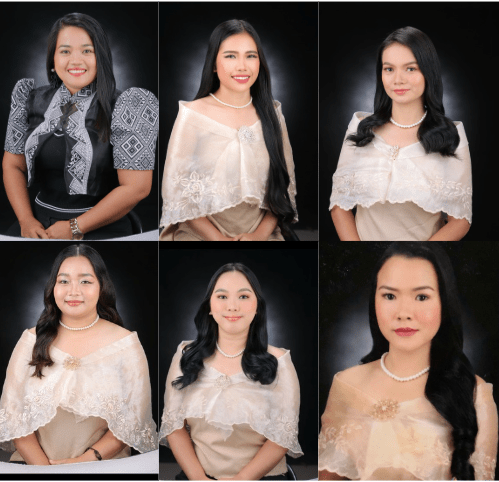
by: Alejandro L. Vengazo, John Jerico C. Fajardo, Jeric P. Albito, Lovely Joy C. Evangelista, Nikka Joy S. Matias, Angelo Dave S. Rosales, Daniel S. Tinguha
ABSTRACT
This study explored the lived experiences of five (5) male Children in Conflict with the Law (CICL) during their rehabilitation at Bahay Pag-Asa using a phenomenological research design. Participants, mostly 15 years old and in the facility for six months, were purposively selected. Data were gathered through interviews, coded, and analyzed using thematic analysis. The most difficult challenges they faced were homesickness and shame, highlighting the crucial role of family in their emotional well-being. Participants expressed regret over their actions, showing that repentance will always be in the latter part. Their accounts revealed that children have vulnerable emotions and often lack awareness of the consequences of their actions. To manage their situation, participants engaged in interpersonal relationship, recreational activities, and faith-based activities. These coping strategies helped ease their emotional burden. Relationships with fellow youth reduced isolation, as they shared similar experiences and challenges. The study emphasized the importance of sports as an outlet of emotion, helping release stress, promote well-being, and offer enjoyment. Meanwhile, faith-based activities allowed them to share personal struggles and served as a source of hope and guidance. The presence of social workers and peers provided strong support systems. Social workers offered not only basic needs but also emotional and psychological assistance. Peers helped lessen loneliness and created a sense of solidarity, uplifting one another during times of distress. The rehabilitation journey resulted in personal growth, companionship, and aspirations. Participants developed discipline, learned to value trust, and found healthier ways to connect with others. Though trust was hard to rebuild, Bahay Pag-Asa showed its importance in building relationships. Lastly, the experience influenced their future aspirations, with education seen as a stepping stone toward a better life. Despite their past, they remained hopeful for change.
Keywords: Homesickness, Shame, Interpersonal Relationship, Recreational Activities, Faith- based Activities, Personal Growth, Companionship, Aspiration
This qualitative research explored the lived experiences of newly-hired senior high school teachers in Bataan who were assigned to teach subjects beyond their specialization during the COVID-19 pandemic. Through a thematic analysis of participant responses gathered via open-ended questionnaires, the study sought to uncover the challenges, coping strategies, and professional growth encountered by teachers as they navigated out-of-field teaching assignments.
Findings revealed that teachers initially experienced anxiety, uncertainty, and lack of confidence due to unfamiliar subject content and pressure to maintain classroom credibility. Despite these challenges, the participants demonstrated adaptability by engaging in self-directed learning, consulting peers, and utilizing digital resources. Over time, many of them reported enhanced versatility, content knowledge, and personal growth. However, the lack of institutional support, such as targeted seminars and mentoring, emerged as a significant concern.
The study concludes that while teachers possess the capacity to adapt to non-specialist assignments, proper support systems are crucial to ensure both effective teaching and teacher well-being. It recommends subject-specific training, access to materials, and strategic teacher deployment as essential measures to support educators handling roles beyond their field of expertise.
Based on the latest available data from the Philippine Statistics Authority, the population of Sitio Campo, Brgy. Gabon in the municipality of Abucay, Bataan as of 2020 is 4,116. The municipalities are divided into communities in which the selected community the Letran-Bataan community program target has 40 households about more than 400 residents lived in the area.
The residents of Sitio Campo engaged in deliberate discussion and interviews to identify, explore and take action on challenges and participations affecting their community in order for the Letran-Bataan community development program identify and address these challenges. In conducting this study, the researcher gathered data through semi-structured interviews from 40 households’ residents of the Sitio Campo. Subsequently, content analysis was used to analyze the data from the interviews from the respondents










 Bughaw Review